
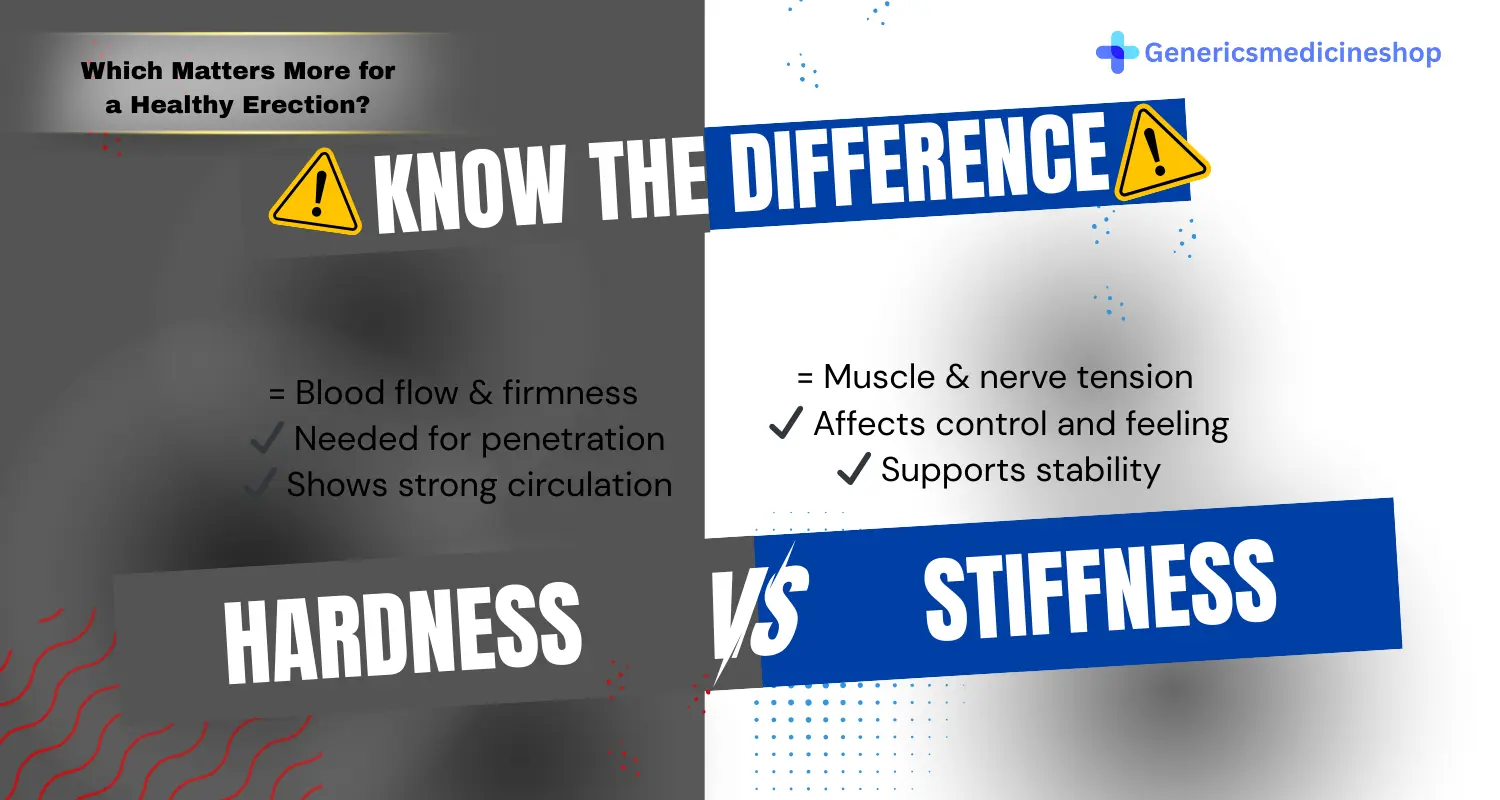
Erection quality plays an important role in male sexual health, yet many men in the United States often confuse hardness and stiffness as the same thing. Although they are closely related, these two terms describe different physical processes. Understanding their difference can help men recognize early signs of erectile dysfunction and take timely action for better sexual health.
This guide explains the medical difference between erection hardness and stiffness, which one matters more, and how lifestyle, mental health, and medical conditions influence erection quality — especially for men living in busy US cities such as New York, Los Angeles, Chicago, Houston, Miami, Dallas, Phoenix, San Diego, San Jose, and San Francisco.
Understanding Erection Quality
Erection quality refers to how firm, stable, and sustainable an erection is during sexual activity. A healthy erection depends on proper blood flow, nerve signaling, hormonal balance, and mental relaxation. Men who focus on ways to Increase Erection Naturally and Effectively often experience better confidence, longer endurance, and improved overall sexual satisfaction through consistent lifestyle habits and stress management.
Doctors often evaluate erection quality based on:
- Ability to achieve firmness
- Ability to maintain firmness
- Consistency during sexual activity
- Absence of pain or discomfort
Hardness and stiffness are two components of this overall quality, but they reflect different underlying mechanisms.
Tip:
Good erection quality means a firm, long-lasting erection that’s easy to achieve. It’s influenced by blood flow, hormones, stress, sleep, and overall health.
What Does “Hardness” Mean in Sexual Health?
In sexual health, hardness means how firm the penis becomes during excitement. This firmness happens when blood flows into the penis and stays there for some time. When there is enough blood, the penis feels hard and ready for sexual activity. If blood flow is weak, the erection may feel soft or not last long. Doctors look at erection hardness to understand sexual health. In simple words, hardness means how strong and firm the erection feels. In simple terms, hardness answers the question:
“Is the erection firm enough?”
What Is “Stiffness” in an Erection?
Erection stiffness refers to the feeling of tightness or rigidity during an erection. The meaning of stiffness in sex is linked to how tense the muscles and nerves become during sexual arousal. How stiffness occurs during an erection is mainly through pelvic floor muscle contraction, nerve signals, and psychological excitement rather than blood flow alone. Because of this, a person may feel stiffness even when the erection is not fully firm, especially during anxiety or stress. While stiffness can create a sense of tension, stiffness by itself does not always lead to a strong or long-lasting erection.
Differences Between Hardness and Stiffness
Hardness vs Stiffness: Medical Explanation
While both terms describe aspects of erection, their causes differ:
- Hardness depends primarily on blood filling and retention
- Stiffness depends more on muscle tone and nerve response
An erection may feel stiff due to muscle tension but still lack adequate hardness for sexual performance.
How Blood Flow Influences Hardness
Healthy arteries allow blood to flow freely into the erectile tissue. Conditions like high blood pressure, diabetes, smoking, or high cholesterol can restrict this flow, leading to reduced hardness.
Because erections are highly sensitive to blood circulation, reduced hardness can be an early warning sign of cardiovascular problems.
The Role of Muscles and Nerves in Stiffness
Pelvic floor muscles and nerve signals contribute to stiffness. Anxiety or over-stimulation can sometimes cause muscle tightening, creating stiffness without sufficient blood volume. This is why stiffness alone is not a reliable sign of sexual health.
Tip:
Hardness refers to how firm the erection feels, while stiffness is about how well it stays rigid during activity, both are important for good sexual performance.
Which Is More Important for a Healthy Erection?
Why Hardness Is a Key Indicator of Erectile Health
From a medical standpoint, hardness matters more than stiffness for a healthy erection. Adequate hardness ensures:
- Successful penetration
- Sustained sexual activity
- Sexual satisfaction
Hardness reflects proper vascular function, which is essential for long-term sexual health.
Can Stiffness Exist Without Proper Hardness?
Yes. Some men experience stiffness due to anxiety, nervousness, or muscle tension but struggle to maintain firmness. This often happens in cases of performance anxiety or early erectile dysfunction.
In such situations, stiffness may be present, but the erection may not be reliable or sustainable.
Common Causes of Reduced Hardness or Stiffness
Poor Blood Circulation
Reduced blood flow is the most common cause of low erection hardness. Contributing factors include:
- Heart disease
- Diabetes
- Smoking
- Obesity
Stress, Anxiety, and Mental Health Factors
Mental stress can interfere with nerve signals required for erection. Performance anxiety, depression, and chronic stress can reduce both hardness and consistency.
Hormonal Imbalance and Low Testosterone
Low testosterone levels can affect libido, erection strength, and overall sexual confidence. Hormonal imbalance may not stop erections completely but can reduce their quality.
Lifestyle Factors Affecting Erection Quality
Unhealthy habits such as:
- Lack of physical activity
- Poor diet
- Excessive alcohol intake
- Sleep deprivation
can significantly reduce erection hardness over time.
-
 Sildenafil
Cenforce 200 Mg
Price range: $110.00 through $170.00 View Product This product has multiple variants. The options may be chosen on the product page -
 Sildenafil
Cenforce Oral Jelly
Price range: $28.00 through $115.00 View Product This product has multiple variants. The options may be chosen on the product page -
 Sildenafil
Cenforce 120 mg
Price range: $88.00 through $227.00 View Product This product has multiple variants. The options may be chosen on the product page -
 Sildenafil
Cenforce 100mg
Price range: $80.00 through $205.00 View Product This product has multiple variants. The options may be chosen on the product page
Signs of an Unhealthy Erection
Difficulty Achieving or Maintaining Hardness
If firmness is difficult to achieve or fades quickly, it may indicate underlying vascular or hormonal issues.
Inconsistent Stiffness During Sexual Activity
Inconsistent rigidity, especially when paired with anxiety, may point to psychological erectile dysfunction or early physical changes.
Ignoring these signs can delay diagnosis and treatment.
How to Improve Erection Hardness and Stiffness Naturally
Lifestyle Changes for Better Erection Quality
Small changes can lead to noticeable improvements:
- Quit smoking
- Reduce alcohol intake
- Maintain a healthy weight
- Stay physically active
Diet and Exercise Tips for Sexual Health
A heart-healthy diet supports sexual health. Focus on:
- Fruits and vegetables
- Whole grains
- Lean protein
- Healthy fats
Regular exercise improves blood flow and testosterone levels.
Managing Stress and Improving Sleep
Adequate sleep and stress management techniques such as meditation or breathing exercises can improve nerve function and sexual confidence.
Tips:
Exercise regularly to improve blood flow and erection strength, eat healthy foods to support firmness, quit smoking to protect circulation, limit alcohol for better nerve function, sleep well to boost testosterone, manage stress for stable performance, practice Kegel exercises for control, drink enough water for tissue health, maintain a healthy weight, and get routine checkups to prevent early erection problems.
Medical Treatment Options for Erection Problems
When to Consult a Doctor
Medical consultation is recommended if:
- Low hardness persists for several months
- Erection problems affect confidence or relationships
- Symptoms worsen over time
Diagnosis and Evaluation of Erection Quality
Doctors may evaluate:
- Blood pressure and blood sugar
- Hormone levels
- Lifestyle and mental health factors
Early diagnosis improves treatment outcomes significantly.
Hardness vs Stiffness: Myths and Facts
Myth: Stiffness alone means a healthy erection
Fact: Hardness is a more reliable indicator of erectile health
Myth: Erection problems only affect older men
Fact: Young men increasingly experience reduced erection quality due to stress and lifestyle factors.
Frequently Asked Questions About Erection Quality
Not always, but persistent low hardness should be medically evaluated.
Yes. Chronic stress affects nerve signaling and blood flow.
Yes, through lifestyle changes, stress management, and medical care if required.