

Skin rashes and itchy red bumps can be alarming, especially when you’re unsure of the cause. Two common conditions often confused with each other are scabies and bed bug bites. While both cause intense itching and skin irritation, they are very different in origin, symptoms, and treatment.
Understanding the key differences between scabies and bed bug bites can help you seek the right treatment quickly and prevent further spread or infestation.
What Is Scabies?
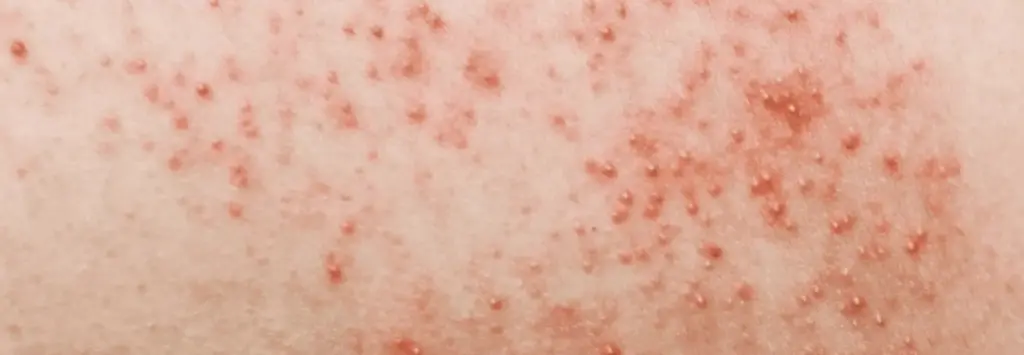
Scabies is a highly itchy skin condition caused by a microscopic parasite known as the human itch mite (Sarcoptes scabiei var. hominis). This tiny mite infests the top layer of human skin, where it burrows to live, feed, and lay eggs. The infestation triggers an allergic reaction, leading to intense itching and a pimple-like skin rash, which is often worse at night.
What are Bed Bug Bites?

Bed bugs are small, reddish-brown insects known scientifically as Cimex lectularius that feed on human blood, usually while a person is sleeping. They hide in mattresses, bed frames, furniture, cracks, and crevices during the day and come out at night to bite exposed skin. Bed bug bites often appear as itchy red bumps, sometimes in lines or clusters. Though they do not transmit diseases, their bites can be irritating and may cause discomfort, redness, and itching.
How can you tell the difference between bedbug bites and scabies bites?
Bed bugs and scabies both cause itchy skin problems, but they are very different in how they live, spread, bite and affect the body.
Appearance of Bites
Bed bug bites: Appear as red, raised bumps that are often arranged in straight lines or clusters (“breakfast, lunch, dinner” pattern). The center may look darker.
Scabies bites: Look like small red bumps or pimples, sometimes with thin, wavy burrow lines in the skin.
Location on the Body
Bed bugs: Bite exposed areas during sleep, such as the arms, neck, face, hands, and legs.
Scabies:
Commonly affects skin folds like the fingers, wrists, elbows, armpits, waist, buttocks, and genitals.
Itching Pattern
Bed bugs: Itching may start hours or days after the bite and varies from mild to moderate.
Scabies: Intense itching, often much worse at night, is a key sign.
Other Clues
Bed bugs: You may notice blood spots on sheets, dark droppings, or live bugs in bedding or furniture.
Scabies: Multiple family members may itch at the same time due to direct skin contact spread.
Treatment for Scabies vs Bed Bug Bites
Scabies Treatment
Scabies requires medical treatment to kill the mites.
- Medicated creams (most commonly permethrin 5%) applied to the entire body as prescribed
- Oral medication (ivermectin) in some cases
- Treat all close contacts at the same time, even if they have no symptoms
- Wash clothes, bedding, and towels in hot water and dry on high heat
- Itching may continue for 2–4 weeks after treatment due to the allergic reaction
These treatments are designed to kill the scabies mites and their eggs. Even after successful treatment, itching may persist for a couple of weeks as the skin recovers. To help soothe discomfort and relieve itching, you can use the following:
- Oatmeal baths to calm irritated skin
- Cool water soaks to reduce inflammation and itching
- Calamine lotion to soothe redness and irritation
- Over-the-counter (OTC) antihistamines to help control itching, especially at night
These measures do not cure scabies on their own but can provide symptom relief while the skin heals.
-
 Ivermectin
Iverjohn 12mg
Price range: $75.00 through $185.00 Select options This product has multiple variants. The options may be chosen on the product page -
 Ivermectin
Iverjohn 6mg
Price range: $75.00 through $185.00 Select options This product has multiple variants. The options may be chosen on the product page -
 Ivermectin
Iverjohn 3mg
Price range: $70.00 through $200.00 Select options This product has multiple variants. The options may be chosen on the product page -
 Ivermectin
Iverhuman 6mg
Price range: $75.00 through $185.00 Select options This product has multiple variants. The options may be chosen on the product page
Bed Bug Bite Treatment
Bed bug bites usually heal on their own in 1 to 2 weeks once exposure stops.
- Anti-itch creams (calamine, hydrocortisone)
- Oral antihistamines to reduce itching
- Avoid scratching to prevent infection
- Eliminate the infestation by washing bedding in hot water, vacuuming, heat treatment, or professional pest control
Key Difference
- Scabies: Needs prescription medication to cure
- Bed bugs: Need pest control, not medical treatment (except for itch relief)
If symptoms persist or worsen, consult a healthcare provider for proper diagnosis and care.
How to Remove Infestations (Scabies vs Bed Bugs)
In addition to treating the bites, it’s also important to eliminate the infestation itself. Each type of pest requires a different approach, as scabies involves treating affected people, while bed bugs require removing the insects from the living environment.
Removing a Scabies Infestation
Scabies infestations must be treated medically, not just cleaned away.
- Use prescription scabicidal creams or oral medication exactly as directed
- Treat all household members and close contacts at the same time
- Wash clothing, bedding, and towels used in the last 3 days in hot water and dry on high heat
- Seal non-washable items in a plastic bag for 3–7 days
- Vacuum mattresses, furniture, and carpets
- Avoid close skin-to-skin contact until treatment is completed
Removing a Bed Bug Infestation
Bed bug infestations require environmental control and pest management.
- Wash bedding, clothes, and curtains in hot water and dry on high heat
- Vacuum mattresses, box springs, furniture, and cracks thoroughly
- Use mattress and pillow encasements designed for bed bugs
- Reduce clutter to eliminate hiding places
- Apply heat treatment or use professional pest control services
- Inspect luggage and second-hand furniture before bringing them inside

FAQs: Scabies vs Bed Bugs
Ans: Scabies is highly contagious from person to person. Bed bug bites are not contagious, but the insects can spread within homes.
Ans: All affected people and close contacts must be treated at the same time, and bedding and clothing should be washed in hot water.
Ans: Scabies does not spread disease but causes severe itching and rash. Bed bugs do not transmit disease, but their bites can be irritating.
Ans: Bed bug bites are caused by insects known as Cimex lectularius, which feed on human blood, usually at night.
Ans: Scabies causes intense itching, often worse at night, with burrow lines and rashes in skin folds. Bed bug bites appear as red bumps in lines or clusters on exposed skin.