
At one time or another, everyone has dreamed of becoming more intelligent—learning more in less time, thinking and reacting faster, and enjoying a sharper memory. In today’s fast-paced world, where mental performance, focus, and productivity are highly valued, the concept of nootropics has gained widespread attention. Often referred to as cognitive enhancers or smart drugs, nootropics are substances designed to support brain function and optimize mental performance. They may help improve mental clarity, memory, focus, attention, motivation, relaxation, mood, alertness, and stress resistance, while also enhancing overall cognitive efficiency. But what exactly are nootropics, and how do they work within the brain to support these benefits? What Are Nootropics?
What Are Nootropics?
Nootropics are natural or synthetic substances that may enhance cognitive functions such as memory, focus, creativity, motivation, and mental energy. The term was first introduced in 1972 by Romanian psychologist and chemist Dr. Corneliu E. Giurgea, who outlined criteria for substances that could improve brain function while being safe and non-toxic.
In simple terms, nootropics are compounds that help the brain work more efficiently without causing significant harmful effects when used responsibly.
How Do Nootropics Work in Brain?
Nootropics work in the brain by improving communication between nerve cells, supporting neuron health, and enhancing energy production. Many have antioxidant properties that protect brain cells from damage caused by free radicals. They support key neurotransmitters like dopamine, acetylcholine, serotonin, and glutamate, which are essential for memory, focus, learning, and mood. Some nootropics improve blood flow and oxygen supply to the brain, offer neuroprotection against stress and aging, and enhance mitochondrial function to boost mental energy and cognitive performance.
Benefits of Nootropics
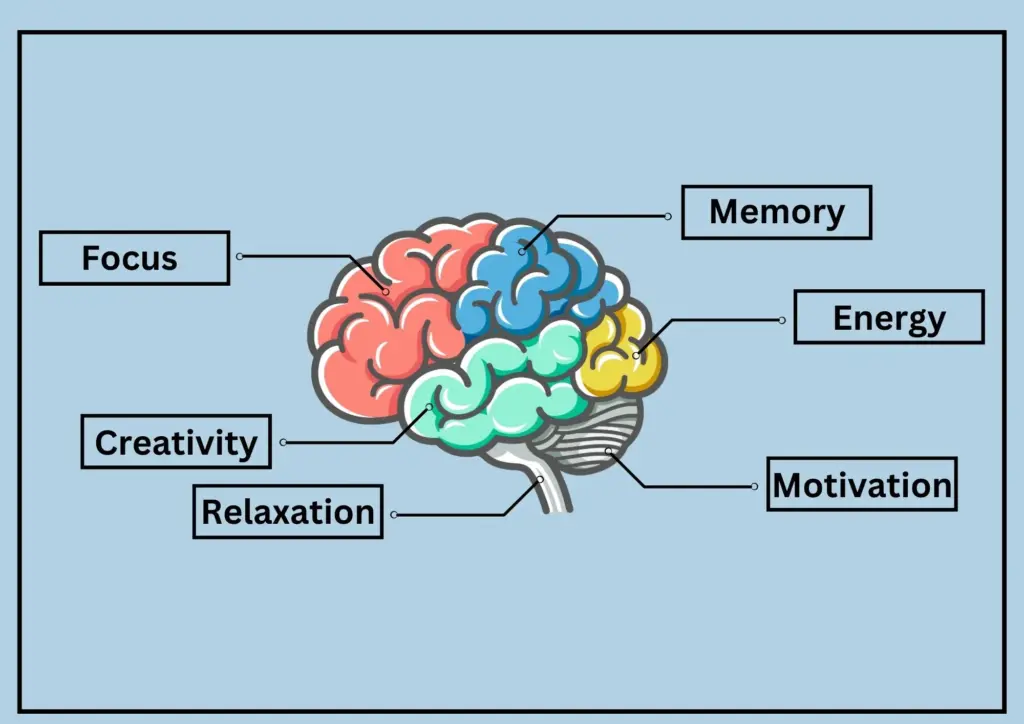
Nootropics offer a wide range of benefits that support both mental performance and long-term brain health. They are commonly used to enhance cognitive efficiency, improve productivity, and protect the brain from mental fatigue and age-related decline. Below are the key benefits of nootropics explained in a structured way:
Improved Focus and Attention: Belps maintain concentration during long and mentally demanding tasks
Enhanced Memory and Learning: Supports better information retention, recall, and faster learning
Increased Mental Energy: Reduces mental fatigue and improves alertness for higher productivity
Better Mood and Motivation: Helps regulate mood-related neurotransmitters and reduce mental stress
Multitasking Ability: mproves mental flexibility and processing speed for handling multiple tasks
Creativity Enhancement: Promotes clearer thinking, idea generation, and problem-solving skills
Athletic Performance Support: Improves reaction time, mental endurance, and mind–muscle coordination
Brain Health and Anti-Aging: Protects brain cells from oxidative stress and inflammation and supports long-term cognitive health and slows age-related mental decline
Who Uses Nootropics?
Nootropics are used by a wide range of individuals, including:
- Students preparing for exams
- Professionals managing high workloads
- Shift workers and night workers
- Individuals with sleep or attention-related challenges
- People seeking long-term cognitive wellness
Quick Tip:
Always take nootropics only after consulting a doctor. The right dosage and guidance help ensure safety, effectiveness, and avoid unwanted side effects.
Types of Nootropics
Nootropics can be broadly divided into two main categories:
Natural Nootropics
Most nootropics are of natural origin and are commonly available as over-the-counter supplements. Many of these compounds are also found naturally in everyday foods and beverages that we regularly consume. Natural nootropics are generally milder in effect and often require long-term, consistent use to show noticeable results.
Side effects from natural nootropics are usually rare and mild, making them a popular choice for individuals seeking gentle cognitive support. However, it is important to note that many nootropic supplements are primarily studied and recommended for people with cognitive difficulties. As a result, their exact effects on healthy individuals are still not fully understood and continue to be an area of ongoing research.
These are derived from plants, herbs, or nutrients and are generally used to support long-term brain health.
Common examples include:
- Caffeine
- L-theanine
- Ginkgo biloba
- Bacopa monnieri
- Omega-3 fatty acids
- Rhodiola rosea
Natural nootropics are often found in supplements and are widely used for mild cognitive enhancement and stress reduction.
Smart Tip:
For best results, use nootropics as a support tool. Start with a low dose, stay consistent, and combine nootropics with quality sleep, balanced nutrition, regular exercise, and effective stress management. A healthy lifestyle enhances their benefits and supports safe, long-term cognitive performance.
Synthetic Nootropics
Synthetic nootropics are man-made compounds, commonly known as smart drugs, that are developed to support cognitive functions such as memory, focus, and attention. Some of these substances are FDA-approved prescription medicines used to treat specific medical conditions, while others are available as over-the-counter supplements. The effectiveness and regulation of these synthetic nootropics can vary widely, with some backed by strong scientific evidence and others having more limited research support.
Synthetic nootropics are lab-created compounds that may offer stronger or more targeted cognitive effects.
Examples include:
- Modafinil
- Piracetam
- Aniracetam
- Noopept
These are often used for specific cognitive goals such as sustained focus, alertness, or memory improvement and require medical supervision.
-
 Modafinil
Vilafinil 200mg
Price range: $100.00 through $200.00 Select options This product has multiple variants. The options may be chosen on the product page -
 Modafinil
Modafinil 200mg
Price range: $129.00 through $329.00 Select options This product has multiple variants. The options may be chosen on the product page -
 Modafinil
Modawake 200 Mg
Price range: $99.00 through $219.00 Select options This product has multiple variants. The options may be chosen on the product page -
 Modafinil
Modalert 200 Mg
Price range: $109.00 through $229.00 Select options This product has multiple variants. The options may be chosen on the product page
Are Nootropics Safe?
The safety of nootropics largely depends on the type of nootropic, dosage, frequency of use, and individual health conditions.
Natural nootropics are generally considered safe when taken in recommended amounts. They are often well tolerated, with mild or rare side effects, especially when used for long-term brain support. However, results may be gradual and vary from person to person.
Synthetic nootropics, including prescription smart drugs, may offer stronger cognitive effects but can also carry a higher risk of side effects. These may include headaches, insomnia, anxiety, or digestive discomfort, particularly if misused or taken without medical supervision.
It is important to remember that nootropics are often studied for individuals with cognitive or neurological conditions, so their long-term effects on healthy individuals are not fully understood. For safe use, nootropics should be taken responsibly, following recommended doses, and ideally under the guidance of a healthcare professional especially for synthetic or prescription-based options.
Nootropics vs Healthy Lifestyle
While nootropics can support and enhance cognitive function, they are not a substitute for a healthy lifestyle. Long-term brain performance and mental clarity are built on strong daily habits that support the brain’s natural processes. Without these foundations, the benefits of nootropics may be limited or short-lived.
Quality sleep is essential for memory consolidation, learning, emotional balance, and overall brain recovery. No nootropic can replace the cognitive restoration that occurs during deep, uninterrupted sleep.
Balanced nutrition provides the brain with essential nutrients such as vitamins, minerals, healthy fats, and amino acids. A diet rich in whole foods supports neurotransmitter production, energy metabolism, and long-term brain health.
Regular physical activity improves blood flow to the brain, supports neuroplasticity, and helps reduce stress and inflammation. Exercise is one of the most effective natural ways to enhance cognitive performance and protect against age-related decline.
Mental stimulation, such as reading, problem-solving, learning new skills, or engaging in creative activities, keeps the brain active and adaptable. Continuous learning strengthens neural connections and supports long-term cognitive vitality.
Stress management is equally important, as chronic stress can negatively impact memory, focus, and emotional well-being. Practices like meditation, relaxation techniques, and proper work–life balance help maintain a healthy mind.
Nootropics work best when used as part of a holistic brain-health approach, complementing healthy lifestyle habits rather than replacing them. When combined with proper sleep, nutrition, exercise, mental engagement, and stress control, nootropics can help support sustainable cognitive performance and long-term brain wellness.

Frequently Asked Questions (FAQs)
Nootropics do not increase intelligence, but they may help optimize existing cognitive abilities by improving focus, alertness, memory, and mental efficiency.
Many natural nootropics are generally safe when taken as recommended. Synthetic or prescription nootropics may have stronger effects and potential side effects, so medical guidance is advised.
Some nootropics, such as caffeine-based options, may work quickly, while others—especially natural nootropics—often require consistent use over weeks to show noticeable benefits.
Yes, many healthy individuals use nootropics to support productivity and mental performance. However, most studies focus on people with cognitive challenges, so effects on healthy users may vary.
Most natural nootropics are not addictive. Some synthetic nootropics may carry a risk of dependence if misused, especially at high doses or without supervision.